Mattress recycling is moving from a specialist concern to a practical question for the UK bed industry. The National Bed Federation’s fifth End-of-Life Mattress Report found that 56% of mattresses were sent for recycling in 2023, up from an estimated 25% in 2021. Yet the real material recovery rate was only 33%.
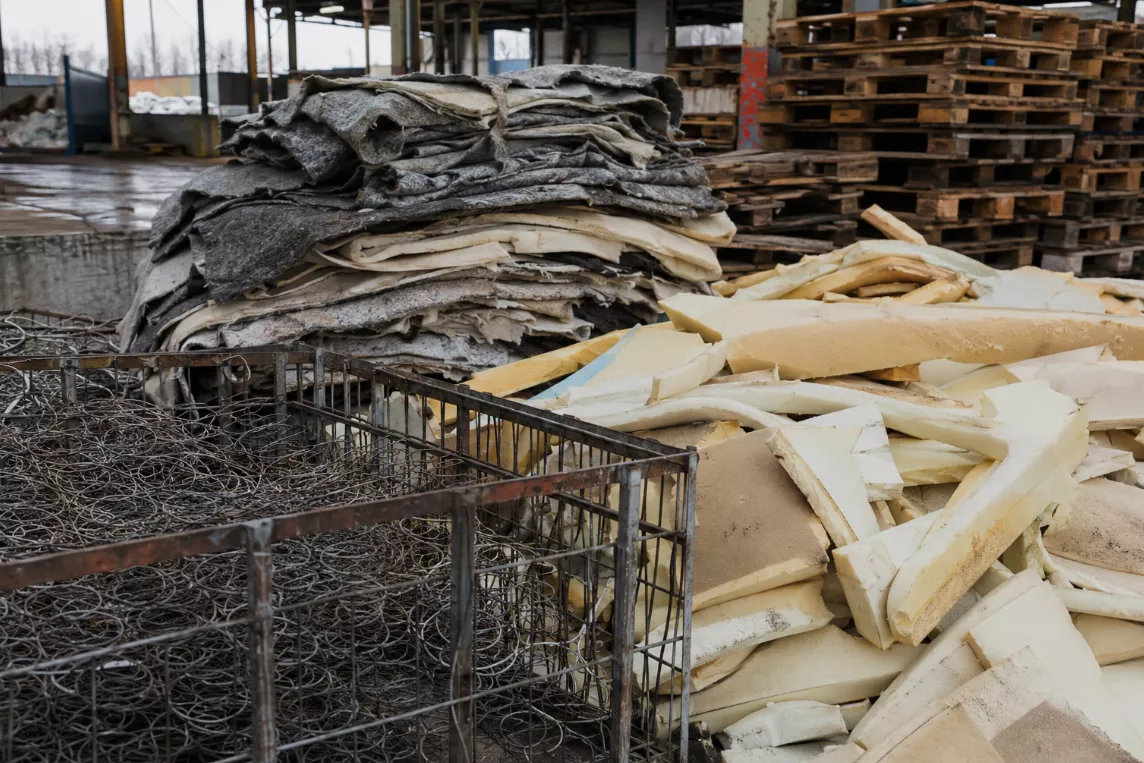
That difference matters. A mattress can enter a recycling facility without all of its components returning to productive use. Steel may have an established recovery route, while mixed textiles, contaminated fillings and bonded foam can be much harder to separate or sell.
For hotels, the issue is particularly relevant. A household replaces one mattress at a time. A hotel may replace dozens or hundreds under one programme. The original specification therefore affects not only guest comfort, but also handling, transport and waste at the end of service.
Sent for Recycling Is Not the Same as Recycled
The headline figure shows real progress. More mattresses are being diverted from landfill, and the UK recycling network is handling a larger share of the market.
But “sent for recycling” describes where a mattress goes. “Material recovery” describes what is successfully separated and returned to use. The second figure is the more demanding measure.
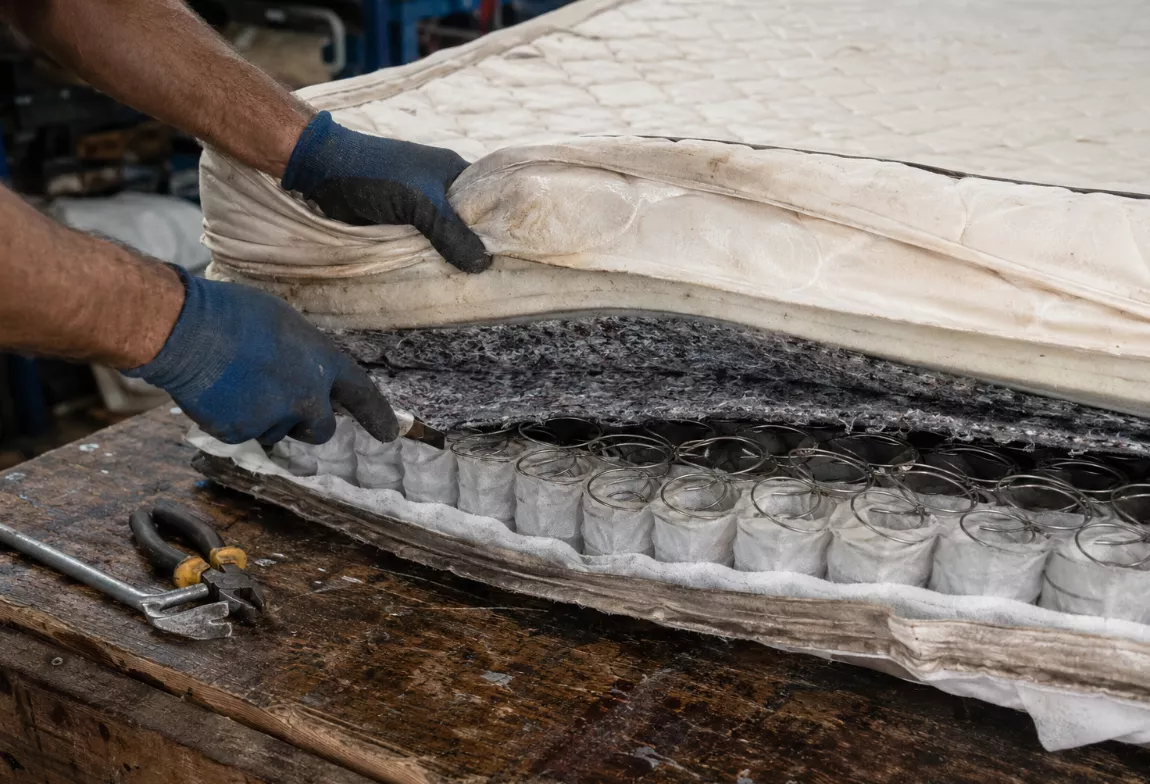
A typical mattress may combine woven ticking, fire-safety layers, foam, felt, adhesive, edge reinforcement and a spring unit. These materials perform together during use, but they do not necessarily come apart easily afterwards. Moisture, contamination and inconsistent component labelling create further complications. Recyclers must also find viable markets for the recovered material.
The National Bed Federation notes that recovered polyester, steel springs and some foams can retain value, while infrastructure, logistics and volatile material markets continue to limit recovery. Progress depends on both better collection and products that are more practical to process.
Why the Hotel Sector Should Look Beyond Disposal
Hotels place unusual demands on mattresses. Products must accommodate different body types, maintain a consistent comfort profile across rooms and tolerate frequent linen changes, edge sitting, lifting and rotation.
This makes durability the first step in circular design. Extending useful life usually avoids more impact than making a mattress easier to recycle but replacing it sooner. A simplified product that loses support or edge stability early is not a sustainable hotel solution.
The procurement calculation should therefore include expected service life, room consistency, maintenance requirements and the eventual recovery route. These factors are connected. Stable specifications make replacement planning easier, while accurate construction records help a recycler understand what is inside each model.
Circular Design Begins at the Specification Stage
The NBF’s Ecodesign Principles define an ecodesigned bed or mattress as one that reduces environmental impact across its life cycle without compromising fitness for use. That final condition is important.
In practical terms, a more circular hotel mattress may consider:
Durable support and edge systems that protect usable life
Fewer unnecessary material combinations
Separable layers where safety and performance allow
Reduced irreversible bonding where an alternative construction is reliable
Clear identification of major materials
Removable covers or replaceable comfort components where hygiene rules permit
Stable model records that remain available throughout a hotel rollout
Not every mattress should use the same solution. Fire performance, hygiene, comfort and contract requirements remain non-negotiable. Circular design is not about removing necessary components. It is about making every component justify its place and considering what happens after use.
The Role of Documentation and Traceability
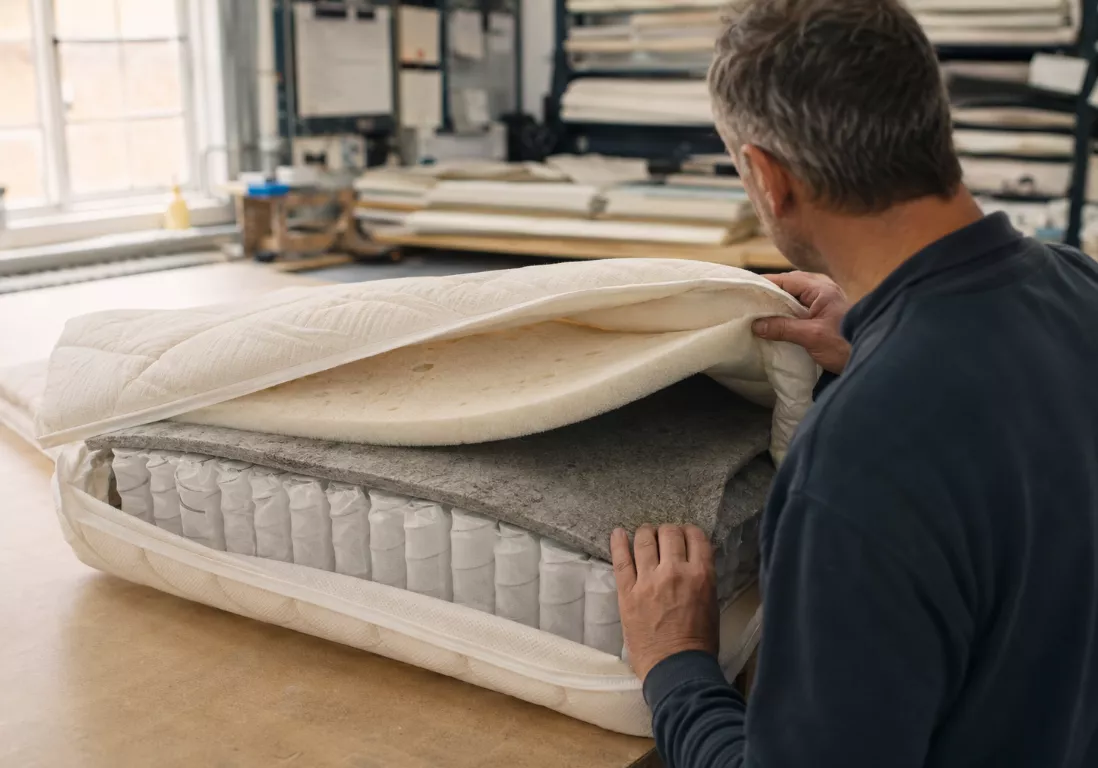
Recycling becomes more difficult when a product arrives with no reliable information about its construction. A recycler may have to treat unknown materials conservatively, even when some components could otherwise be recovered.
For a hotel group, a basic product record can be valuable long after installation. It may include the spring type, principal comfort materials, fire-safety system, approximate material weights and any components that can be removed separately.
This is also useful during the operating life of the mattress. If a model is locked for a multi-property rollout, procurement teams can plan replacements without creating unnecessary variation between rooms. Traceability supports consistency first and end-of-life decisions later.
Questions Hotel Buyers Can Ask
Sustainability claims are often broad. Procurement questions should be specific:
What service life is the mattress designed to achieve under hotel use?
Which components are likely to be recovered in the destination market?
Are major layers mechanically attached, stitched or permanently bonded?
Is the model construction documented and kept stable for future replacements?
Can the supplier support a take-back or recycling route in the hotel’s region?
Are reused materials or components clearly declared?
The last point matters because reuse without proper disclosure can damage trust and may introduce hygiene, safety or compliance risks. A credible circular strategy must remain transparent.
From Unit Price to Lifecycle Value
Hotel mattress purchasing is often compared by unit price, height and initial comfort. Circular thinking adds another dimension: what value does the mattress deliver over its full working life?
A product that performs consistently, requires fewer early replacements and has a clear end-of-life route may create better value even when its initial price is not the lowest. For large room counts, small differences in service life and disposal cost can become significant.
This does not mean every hotel needs an elaborate environmental programme. It means the end of a mattress’s life should no longer be treated as someone else’s problem.
A More Honest Definition of a Sustainable Mattress
The UK mattress industry has made measurable progress, but the gap between collection and real material recovery shows how much work remains. The NBF continues to call for stronger infrastructure, consistent standards and an Extended Producer Responsibility approach, with an industry target of diverting 75% of mattresses from landfill by 2028.
For hotel mattresses, the most credible path is not a single “green” fabric or a recycling symbol. It is a combination of long service life, disciplined material choices, verifiable construction and realistic recovery planning.
At Zentop Sleep, we believe hotel mattress design should begin with performance and continue through the full product life cycle. Comfort, durability, compliance and circularity should support one another—not compete for attention.